
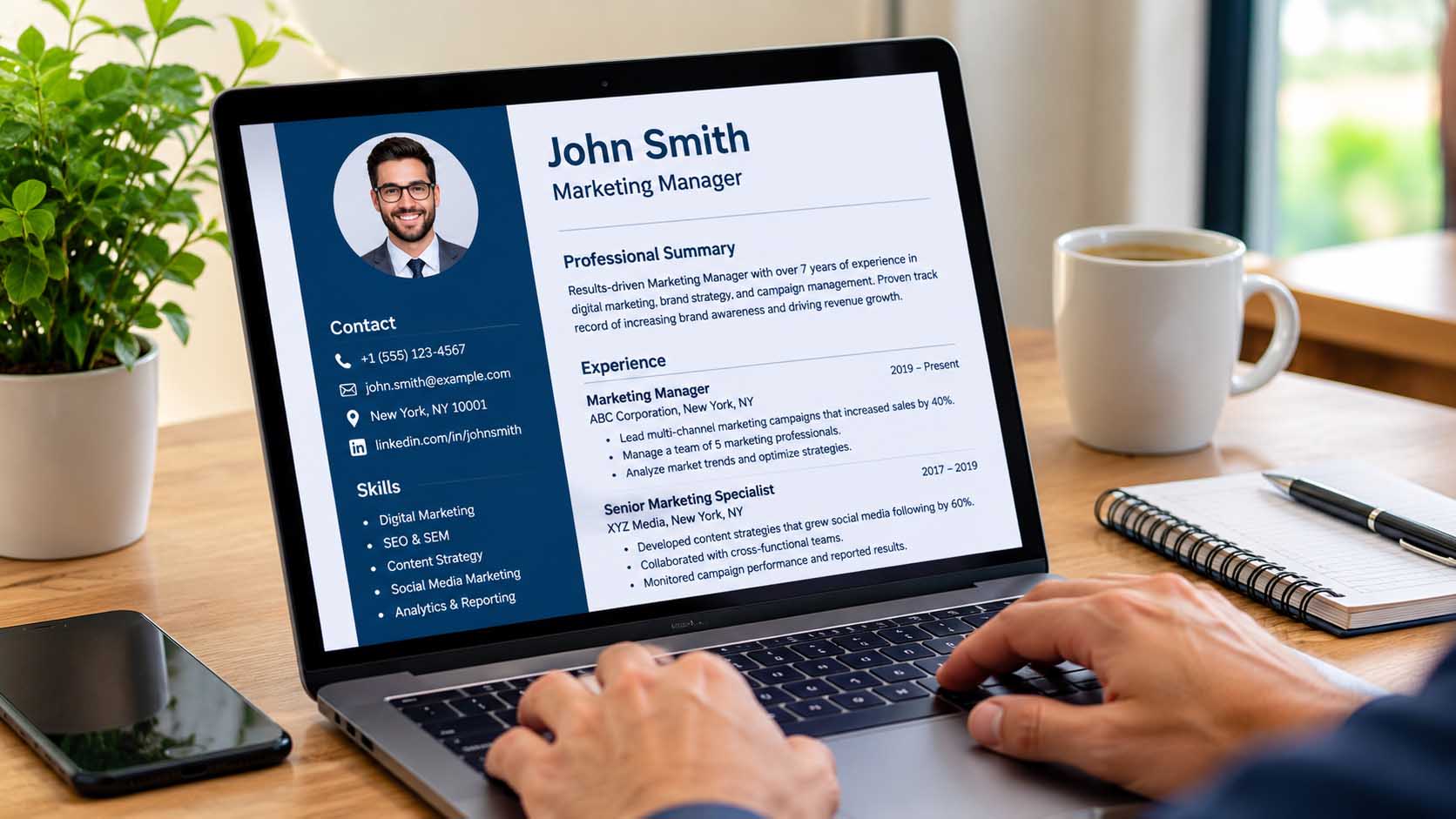
A modern resume helps a job search by making it easy to see what you can do, how your experience fits a role, and why an employer should invite you to talk. Modern does not have to mean a colorful template or a page full of graphics. It means current, relevant information presented clearly for both people and the application systems employers may use. A strong resume can help you earn consideration and an interview, but it cannot guarantee a job.
Want to create a professional resume that stands out? Use our Online Resume Builder to build a modern, professional resume with ease.
What makes a resume modern?
A resume becomes more useful when it reflects the work you want to do now, rather than simply listing everything you have ever done. It should help a reader connect your recent experience, skills, education, and accomplishments to the role at hand. That takes accurate content and thoughtful organization more than a fashionable design.
It is tailored to a real opportunity
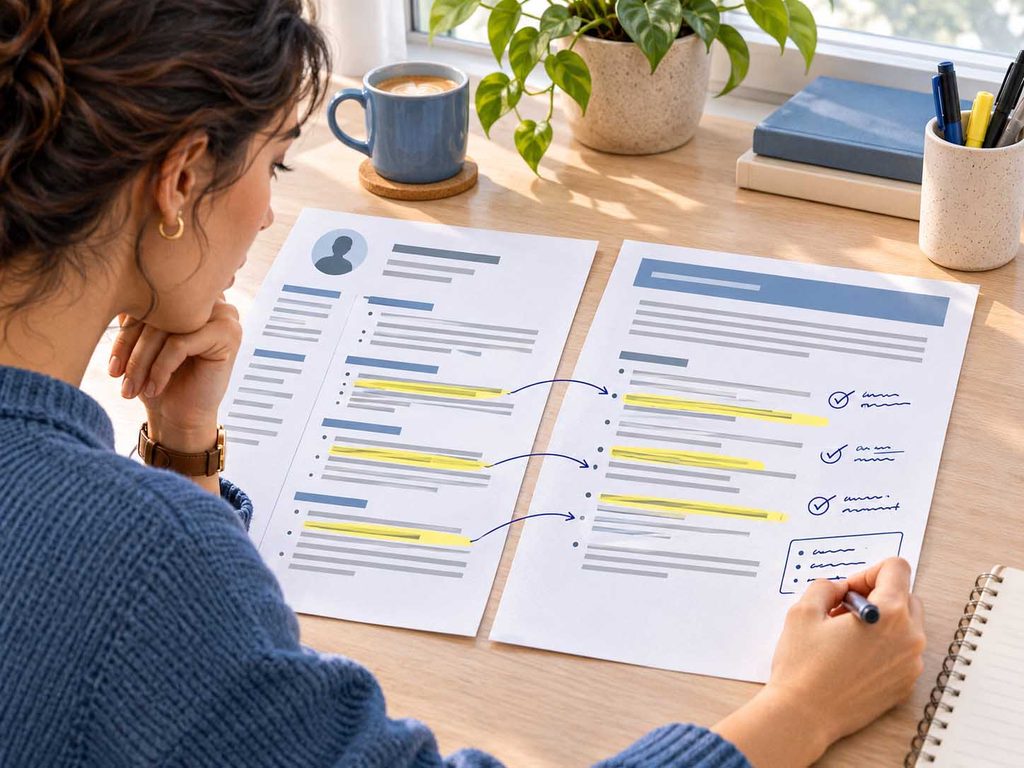
A general resume may be a useful starting point, but sending the same version to every employer can hide your strongest fit. Read the job description and identify the skills, responsibilities, tools, and qualifications that matter most. Then bring the relevant evidence forward: a matching achievement, a project, a certification, or a skill used in a previous role.
Use the employer’s language when it accurately describes your experience. If a listing asks for data analysis and you have done that work, name the skill clearly and show where you used it. Do not add keywords you cannot support. A resume should be a truthful account, not an attempt to trick a screening system.
It shows proof, not just traits
Words such as dependable, creative, and results-oriented are claims. A short example helps an employer judge them. Describe what you did, the scope or challenge, and the outcome. When you have reliable numbers, include them: the size of a budget, the number of customers supported, the time saved, or the volume of work handled. If you do not have a defensible metric, explain the result in clear words instead of inventing one.
This evidence matters because employers may assess skills, not only job titles or degrees. In NACE’s 2026 Job Outlook survey, 70% of 183 employer respondents said they use skills-based hiring for entry-level roles, and 65% said they use it during screening. The survey covered employers recruiting new college graduates, so its figures should not be treated as a measure of every occupation or country. NACE’s advice for candidates is to connect skills to examples and the job being applied for.
It includes more than paid job titles
People starting out, changing careers, returning to work, or working in a field with informal experience may have useful evidence outside a conventional job history. Relevant coursework, internships, freelance assignments, volunteer work, caregiving responsibilities, community projects, and portfolios can all demonstrate transferable skills when described honestly and connected to the target role.
For example, a student applying for an operations role could describe coordinating a campus event: the schedule, people, budget, or problem they handled. A career changer could bring forward planning, client communication, or technical work from a previous field. The point is not to make every experience sound like a formal job. It is to explain what you did and why it is relevant.
It is easy to read and easy to maintain
A modern resume should be simple to scan on a screen. Use clear section headings, consistent dates, readable type, and concise bullet points. Keep important information in the main document body. A complicated layout with columns, icons, charts, or text boxes may look distinctive but can make information harder for some software to extract.
CareerOneStop, sponsored by the U.S. Department of Labor, recommends a clean, consistent single-column layout and familiar headings because some applicant tracking systems can scramble tables, graphics, or information placed in headers and footers. Its resume formatting guide also advises following the employer’s requested file type. These are practical precautions, not a promise that every employer uses the same software or filters applicants in the same way.
Creating an ATS-friendly resume is essential for improving your chances of getting noticed by recruiters. You can use our ATS-friendly Resume Builder to create a well-structured professional resume.
Design-focused roles can call for a portfolio or a more visual presentation. Even then, keep a readable version for online application systems and use a portfolio link to show work that a resume cannot. Modern formatting should support the content, not compete with it.
How can a modern resume help you land a job?
A resume usually supports the first steps of hiring. It may be read by an application system, a recruiter, a hiring manager, or more than one of them. A clear, role-specific document can help in several practical ways:
- It makes relevant qualifications easier to find. A concise summary and well-ordered sections help the reader see the match without searching through unrelated details.
- It connects experience to the employer’s needs. Tailored examples show how your work relates to the listed responsibilities and required skills.
- It gives screening tools readable information. Standard headings and a straightforward layout can reduce avoidable parsing problems, while accurate role-related terms help clarify your experience.
- It gives an interviewer useful questions. Specific projects and outcomes create natural prompts for discussing how you work and what you contributed.
- It keeps your professional story current. Regular updates make it easier to apply when a suitable role appears and help you avoid forgetting recent achievements or training.

A practical way to update your resume
- Choose a target. Identify the type of role or a specific opening before changing the document.
- Collect evidence. List relevant responsibilities, projects, training, tools, and outcomes. Use only details you can explain and verify.
- Prioritize the strongest match. Put the most useful experience and skills where they are easy to see. Use reverse chronological order for work history unless another format better fits your situation.
- Write concise accomplishment bullets. Start with an action, add context, then state the result or scale when you can support it.
- Check the final file. Proofread names, contact information, dates, links, and formatting. Follow the application instructions for PDF, Word, or another file type, and open the saved version to confirm it displays correctly.
Once you have gathered your experience, skills, and achievements, the next step is to organize them into a professional format. You can use the Softtl Resume Builder to create a clear, well-structured resume that highlights your qualifications and helps present your professional experience effectively.
Modern does not mean identical everywhere
Resume conventions vary by country, industry, seniority, and employer. Some markets expect a CV, some job applications request a longer federal-style history, and creative fields may value a portfolio alongside a resume. Check local norms and the specific instructions in the job posting before removing information or choosing a format.
The best modern resume is the one that represents your experience accurately and makes its relevance clear. Keep a complete master copy, then adapt a focused version for each opportunity. That small habit can make your next application easier to read, easier to discuss, and more useful to the person deciding whom to interview.
Leave a Reply